

The numbers NYC DOT reported for the first half of 2026 are worth pausing on. Through June 29, 46 pedestrians lost their lives on New York City streets — down 13% from 53 at the same point last year, and the lowest figure in the city’s recorded history outside the empty streets of the 2020 pandemic. Citywide, 94 people died in traffic, making 2026 the fifth-safest year on record to date. Since Vision Zero launched in 2014, pedestrian deaths are down 42% and total traffic deaths down 25%. In a country where most large cities have watched roadway deaths climb, New York is moving decisively in the other direction.
That progress is not an accident, and it is not the product of any single program. As NYC DOT itself puts it, Vision Zero is woven across the agency’s policy, planning, engineering, and operations groups — a genuinely data-driven approach that treats every death as one too many. Street redesigns on Manhattan’s Third Avenue, Brooklyn’s Court Street, and the Cross Island Parkway have rebalanced streets around the most vulnerable users. Automated enforcement has done the quiet, relentless work that human patrols never could: speed-camera violations are down 95% and red-light violations down 80% where cameras operate. The city has earned these results.
The honest part: fifth-safest is not zero
Here is the harder truth inside the same dataset, and DOT is refreshingly candid about it: there is still a lot of work to do. Record-low pedestrian deaths sit alongside an overall year that ranks fifth-safest, not first — and a few categories are moving the wrong way. Deaths involving e-bikes, scooters, and mopeds rose to 18 from 16 a year earlier, with e-scooter fatalities doubling from three to six. The curve that fell so steeply after 2014 is beginning to flatten, which is what happens when the highest-leverage fixes are already in place.
Street geometry and enforcement are powerful because they change the odds everywhere, all the time. But they intervene on conditions, not on moments. They cannot reach the specific half-second in which a crash actually happens: a driver turning left across a crosswalk into a low winter sun, a pedestrian stepping out from between two parked box trucks, a cyclist and a right-turning driver who simply never see each other in the rain or the dark. A redesigned corner improves the geometry of that encounter; a speed camera may have slowed the vehicle a block earlier. Neither one is present, in real time, at the point of conflict. Closing the last gap to zero means adding something that is.
The missing layer is a digital one
Physical infrastructure has carried Vision Zero a remarkable distance. The next distance calls for a digital layer on top of it — a way for people and vehicles to be aware of one another before either is visible to the other, in any weather, day or night.
That capability already exists, and it is already in New Yorkers’ pockets. Ultra-Wideband (UWB) is a short-range radio technology that pinpoints location to within 10 to 30 centimeters — lane-level, even person-level precision. It ships in every iPhone since the iPhone 12 and in a growing share of 2025-and-newer vehicles through the industry’s Digital Key standard. Unlike GPS, UWB holds its accuracy in the urban canyons, tunnels, and dense blocks where satellite signals scatter. Unlike cameras and LiDAR, it does not blind in fog, glare, snow, or darkness. And unlike either, its signals cannot be easily spoofed or jammed. It is, in short, built for exactly the moments that still defeat design and enforcement.
New York has already seen this work
This is not an untested idea being dropped on the city from the outside. New York City helped build the foundation for it.
Through the U.S. DOT Connected Vehicle Pilot, NYC DOT became a national leader in connected pedestrian safety — including the Mobile Accessible Pedestrian Signal System (PED-SIG), which used connected technology to help New Yorkers with vision disabilities cross intersections safely. That work was led by engineers who know this domain as well as anyone in the country, among them Dr. Mohamad Talas (PE, PTOE, PhD) of NYC DOT. Dr. Talas can speak directly to the UWB demonstration conducted during the pilot — real hardware, on real New York City streets, showing what precise connected positioning adds to pedestrian safety.
URGNs™ — Ultra-Wideband Roadway Geometry Networks — is the operational next step on that foundation. Rather than asking the city to build anything new, URGNs embeds small UWB tags into infrastructure NYC already owns and maintains: raised pavement markers, streetlights, and roadside posts. Because the work rides along with routine striping and maintenance cycles as a change-order rather than a new capital procurement, the installed cost is a fraction — by the company’s estimate, less than a tenth — of ordinary restriping. A companion app delivers audible and visual alerts to pedestrians and cyclists, and the same network gives connected vehicles a precise, all-weather sense of where people actually are.
No cost, no risk — by design
For decision-makers, the most important sentence is this one: bringing URGNs to New York carries no cost and no capital risk to the city.
The model is a public-private partnership. A private partner funds the full deployment and operates the network for 30 years. The city pays nothing and puts no taxpayer capital at stake. The partner recovers its investment not by billing the city, but by licensing precise-positioning data to the parties who are already paying for it elsewhere — automated-driving and ADAS manufacturers, commercial fleets, delivery services, and insurers. New York contributes the one thing it already does well: maintaining its own streets. In return it gains a safety layer that would otherwise compete with schools, transit, and housing for scarce capital dollars — and doesn’t have to.
That structure matters because the alternative to innovation here is not the status quo; it is a plateau. The tools that produced a decade of progress are reaching the limit of what they can do alone. A no-cost, no-risk pilot is a low-stakes way to test whether the next layer can move the needle the rest of the way.
An invitation
NYC DOT has said it will keep seeking innovative approaches to safer streets, and that ethos is exactly why New York leads the country on this issue. Getting from the fifth-safest year to zero will take a tool that works in the moments street design and enforcement cannot reach — and it can be deployed without a line item, without new hardware procurement, and without taxpayer exposure.
We would welcome a technical workshop with DOT’s Policy, Transportation Planning & Management, and Traffic Operations teams to walk through a no-cost New York City pilot, building directly on the Connected Vehicle Pilot foundation the city already pioneered. New York proved that Vision Zero works. Let’s finish the job.
Start the conversation
Schedule a technical workshop with your Vision Zero teams — urgns.com
Other Articles
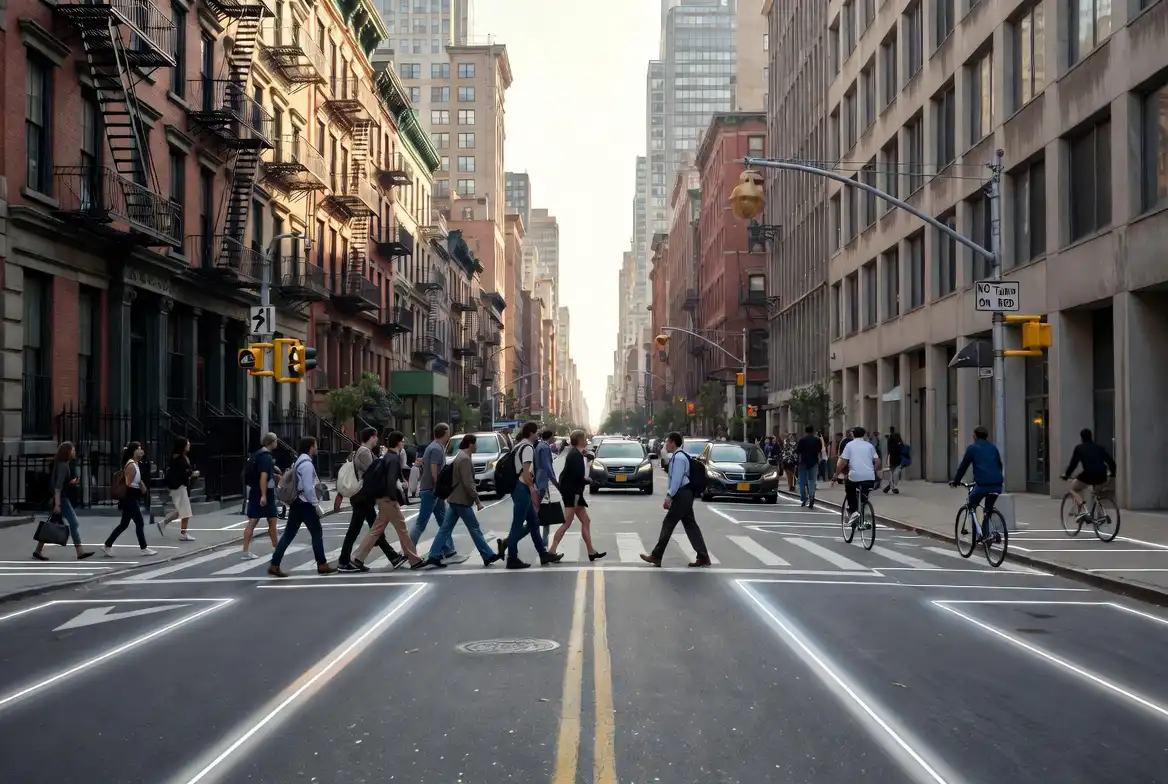
Record-Low Pedestrian Deaths Prove Vision Zero Works. Getting to Zero Will Take One More Layer — At No Cost to the City.
The numbers NYC DOT reported for the first half of 2026 are worth pausing on. Through June 29, 46 pedestrians…

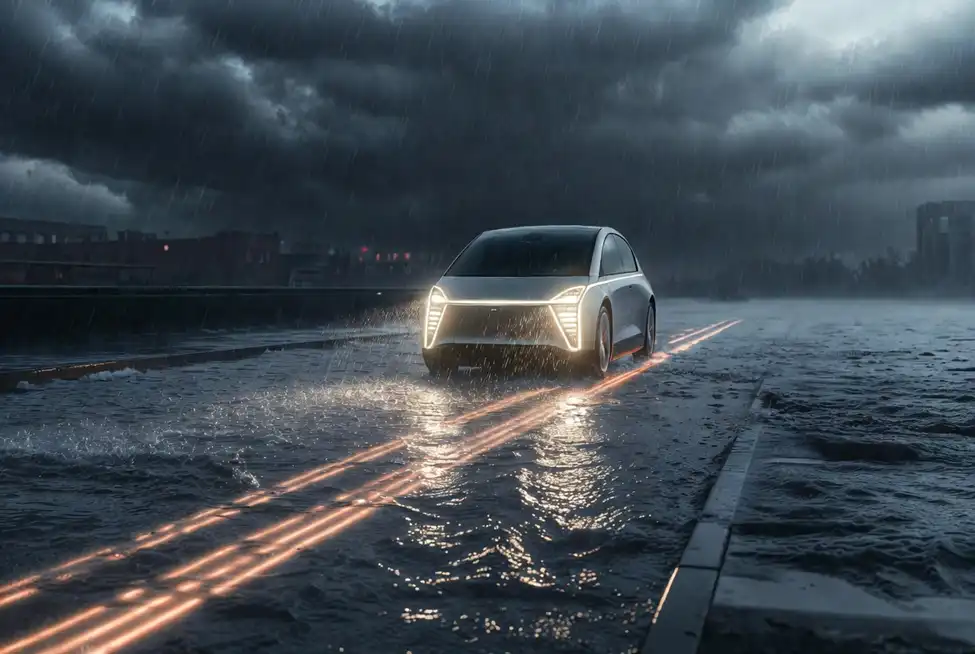
Why Waymo’s Flooded-Road Recall Proves Robotaxis Need All-Weather Positioning Infrastructure
A sixteen-year-old with a learner’s permit would have stopped at that flooded road. One of the most advanced autonomous driving…
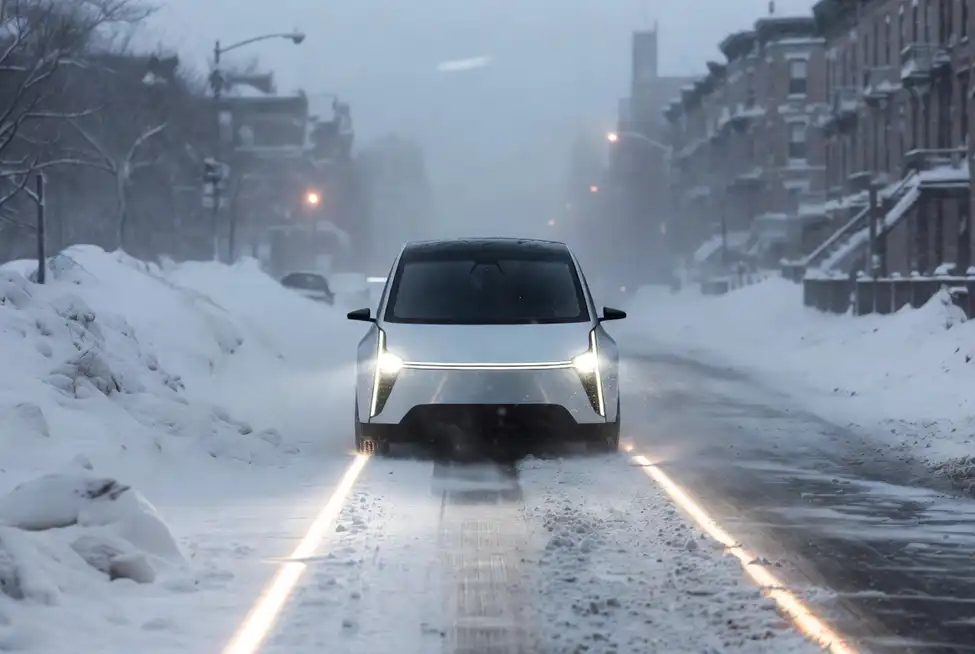
The Robotaxi Boom Has a Blind Spot. The SELF DRIVE Act Can Fix It.
The robotaxi era is no longer a forecast — it’s a fare. Waymo alone was delivering roughly 500,000 paid robotaxi…
