

The robotaxi era is no longer a forecast — it’s a fare. Waymo alone was delivering roughly 500,000 paid robotaxi rides every week as of March 2026, ten times its volume from less than two years earlier, and it has announced new service in San Diego, Las Vegas, Denver, and Tampa with more than 20 additional cities targeted by the end of 2026. Tesla is carrying riders in Austin. Zoox is on the road in Las Vegas and San Francisco. And Washington is moving with the market: the SELF DRIVE Act of 2026 (H.R. 7390) — the first serious national framework for autonomous vehicles in nearly a decade — advanced out of House subcommittee this February.
But the same season produced a very different set of headlines. In May 2026, NHTSA recalled nearly 3,800 robotaxis after vehicles drove through flooded streets in Atlanta and San Antonio. Operators paused freeway service over construction-zone confusion and suspended robotaxi operations during severe weather. The pattern behind these events is consistent: robotaxis are scaling faster than the one thing every autonomous vehicle depends on — knowing exactly where it is, in every lane, in every tunnel, in every storm.
That is the gap URGNs™ has asked Congress to close. On June 9, 2026, we submitted proposed bipartisan language for the SELF DRIVE Act that would, for the first time, make infrastructure-verified micropositioning data count as official safety evidence for robotaxis and other autonomous vehicles — and let it flow into the national safety database the Act creates. Here’s what’s in it, and why it matters to anyone who will ever step into a robotaxi.
Robotaxis in 2026: Scaling Faster Than the Rules Beneath Them
The numbers tell the growth story. Waymo went from about 50,000 weekly paid rides in May 2024 to roughly 500,000 by March 2026, logged more than 14 million trips in 2025, and reported a fleet of over 3,000 robotaxis to federal regulators. Zoox, Motional, and Tesla are all expanding paid service, and autonomous vehicle trips on Uber’s platform grew more than tenfold year over year.
The rulebook tells a different story. Robotaxi operators today navigate a patchwork of more than 30 differing state AV laws. New York’s governor declined to expand autonomous operations statewide. Washington, D.C. is still weighing permits. And every viral clip of a robotaxi stalled in an intersection — or wading into a flooded street — erodes the public trust that expansion depends on. The industry’s biggest constraint is no longer the vehicle. It’s confidence, evidence, and the road itself.
What Is the SELF DRIVE Act of 2026?
The SELF DRIVE Act of 2026 (H.R. 7390), sponsored by Rep. Bob Latta (R-OH), would establish a single national framework for autonomous vehicles. Manufacturers would document a safety case — structured evidence that their automated driving systems are safe — while a new National Automated Vehicle Safety Data Repository gives regulators and researchers a shared factual record. Federal preemption would replace the state-by-state patchwork with one set of national rules.
On February 10, 2026, the House Energy & Commerce Subcommittee on Commerce, Manufacturing & Trade forwarded the bill to full committee by a roll-call vote of 12–11. One vote. That razor-thin margin is the most important fact in autonomous vehicle policy right now, and it’s worth understanding what it does — and doesn’t — mean.
The disagreement is not about whether robotaxis should be allowed. It’s about whether the framework does enough on safety evidence, data transparency, and the role of states and cities while still letting deployment scale. Deployment champions want national uniformity and speed. Safety and transparency advocates want richer data than crash self-reports and a meaningful role for the communities where robotaxis actually drive. Any language that moves the bill forward has to give both camps a concrete win.
The Robotaxi Blind Spot: Positioning That Fails When It Matters Most
A robotaxi answers two questions continuously: what is around me? (perception — cameras, lidar, radar) and where exactly am I? (positioning — GPS, map-matching, lane detection). The industry has poured billions into the first question. The second still leans on satellite signals and painted lines — and both fail in predictable places:
- Weather. Heavy rain, fog, and snow degrade cameras and lane detection — which is why operators suspend robotaxi service in severe weather, exactly when residents most need a safe ride.
- Water on the road. The May 2026 recall of nearly 3,800 robotaxis followed vehicles driving into flooded streets they could not correctly assess.
- Tunnels, urban canyons, and parking structures, where satellite signals are blocked, reflected, or simply absent.
- Worn or missing lane markings and construction zones — the trigger for suspended freeway operations in multiple cities this year.
None of this means robotaxis are unsafe. It means their positioning stack was built for good conditions, and the safety conversation in Congress is happening without an answer for the bad ones. Every hour a robotaxi fleet sits out a storm is a reminder that the missing piece isn’t on the vehicle at all. It’s in the road.
What Is Micropositioning?
Micropositioning is infrastructure-based, lane-level positioning: a network of fixed ultra-wideband (UWB) transmitters — embedded roadway markers plus streetlight, pole, and tunnel mounts — that broadcast signals letting a vehicle compute its own position to 10–30 cm accuracy, in all weather, with no satellite required. Think of it as lighthouses for the roadway: the infrastructure transmits, the vehicle listens and locates itself.
Three properties make micropositioning different from every other proposed fix:
- It’s all-weather and GPS-independent. UWB signals don’t care about fog, snow, glare, faded paint, or tunnel walls. When cameras and satellites degrade, the position fix doesn’t.
- It’s private by architecture. The infrastructure is transmit-only. It never identifies, ranges to, or tracks any vehicle or person — the same way a lighthouse never knows which ships saw it.
- It’s already in the ecosystem. The same standard UWB radios ship today in modern iPhones, Android devices, and many 2025-and-newer vehicles. Robotaxis can add micropositioning as an independent cross-check on GPS, cameras, and lidar — not a replacement for them.
For a robotaxi safety case, that independence is the point: infrastructure-derived position data is a third-party reference that doesn’t share failure modes with anything on the vehicle. See how the network is built on our products page and what deployment looks like in cities and on highways.
Inside the Bipartisan Addition to the SELF DRIVE Act
On June 9, 2026, URGNs™ founder and CEO Robert James submitted draft legislative language to the office of Rep. Gus Bilirakis (FL-12) — chairman of the subcommittee that advanced the SELF DRIVE Act — proposing a new Section 7: Infrastructure-Based Positioning, Cooperative Safety Deployment, and Resilient PNT. The language is deliberately technology-neutral and vendor-neutral; it names no company and no product. Here is what it would do:
- Make micropositioning count as safety evidence. Federal regulators would recognize independent, infrastructure-derived positioning data as one acceptable form of evidence in an AV safety case — covering lane-keeping, operational design domain conformance, minimal-risk maneuvers, and performance in degraded visibility.
- Enrich the national safety repository. Standardized, privacy-protected micropositioning data could flow into the National Automated Vehicle Safety Data Repository — giving regulators robotaxi safety data that goes beyond crash self-reporting, with no new reporting burden on manufacturers.
- Create a voluntary corridor program for states and cities. States and local governments could get help deploying micropositioning on priority corridors — winter-weather routes, tunnels, school zones, transit corridors, and high-crash locations — using existing formula funds, with participation explicitly protected from preemption conflicts.
- Equip public fleets with safety monitoring. Transit, paratransit, and emergency vehicles could carry event-data-recording based on infrastructure positioning — black-box quality evidence for incident reconstruction and faster emergency response.
- Strengthen resilient PNT. A terrestrial complement to GPS, independent of vulnerable or foreign systems, supporting national security and U.S. competitiveness.
- Lock in privacy. Nothing in the section authorizes tracking of individuals — the transmit-only, no-tracking design is written into the statute itself, and repository data must exclude personally identifiable information.
| The compromise in one sentence: recognize independent, infrastructure-derived micropositioning as acceptable robotaxi safety evidence, let it voluntarily enrich the national data repository, give states a voluntary deployment pathway, and support resilient positioning — all technology-neutral, all voluntary, with no new manufacturer mandate and no cost to taxpayers. |
That last clause is why the language is bipartisan by design. Safety and transparency advocates get harder evidence, richer public data, black-box monitoring, and statutory privacy protection. Deployment champions get performance-based standards instead of prescriptive mandates, a preserved national framework, and faster all-weather operation — funded through public-private partnership, with zero new appropriations. The proposal is currently draft discussion language before the committee as the bill moves toward full-committee consideration; it has not yet been enacted.
What It Means for Riders, Cities, and Robotaxi Operators
For riders, micropositioning is the difference between a robotaxi service that pauses for weather and one that verifiably holds its lane through it — with school-zone precision and a national safety record regulators can actually audit.
For cities and states, the corridor program is a seat at the table that doesn’t break national uniformity. Consider Tampa: Waymo has announced robotaxi service there, and URGNs™ — a Tampa Bay company — has already presented a zero-cost micropositioning corridor proposal to Tampa City Council. Pair the two, and Tampa could become the first robotaxi market in America where autonomous fleets ride on an independently verified positioning layer from day one.
For robotaxi operators, independent infrastructure evidence hardens every safety case: faster regulatory clearance, stronger answers after incidents, insurer-grade data, and a credible path to all-weather service — the last unclaimed competitive frontier in the robotaxi race.
Robotaxi FAQ
What is a robotaxi?
A robotaxi is a self-driving vehicle that carries paying passengers with no human driver on board. Riders hail it through an app, and the automated driving system handles the entire trip. Waymo, Tesla, Zoox, and Motional all operate robotaxi services in U.S. cities as of 2026.
Which U.S. cities have robotaxis in 2026?
Waymo operates in more than ten metros — including Phoenix, San Francisco, Los Angeles, Austin, Atlanta, Miami, Dallas, Houston, San Antonio, and Orlando — and has announced San Diego, Las Vegas, Denver, and Tampa, with 20+ additional cities targeted by the end of 2026. Tesla offers robotaxi rides in Austin; Zoox serves Las Vegas and San Francisco; Motional operates in Las Vegas.
What is the SELF DRIVE Act of 2026?
H.R. 7390 is federal legislation creating a single national framework for autonomous vehicles: manufacturer safety cases, a National Automated Vehicle Safety Data Repository, and federal preemption of today’s 30-plus conflicting state AV laws. It advanced out of House subcommittee 12–11 on February 10, 2026.
Does the SELF DRIVE Act require micropositioning reporting from robotaxis?
Not today — and the URGNs™ proposal is deliberately voluntary rather than a mandate. The draft Section 7 would make infrastructure-derived micropositioning data a recognized form of robotaxi safety-case evidence and let it enrich the national repository, while states joining the voluntary corridor program would contribute standardized, privacy-protected positioning data. Voluntary, technology-neutral design is what makes the provision viable for both parties — and it still moves the industry’s evidence standard decisively forward.
What is micropositioning?
Micropositioning is infrastructure-based, lane-level positioning: fixed ultra-wideband transmitters in and along the roadway let a vehicle compute its own position to 10–30 cm in all weather, including tunnels and other GPS-denied areas — with a transmit-only design that cannot track anyone.
Can robotaxis drive in rain, snow, or fog?
Only partially. Operators routinely pause robotaxi service in severe weather, and NHTSA’s May 2026 recall followed robotaxis entering flooded streets. Cameras, lidar, and GPS all degrade in bad conditions. An infrastructure-based micropositioning layer keeps the lane-level position fix intact when everything else blurs — the missing ingredient for true all-weather robotaxi service.
Build the Ground Layer of the Robotaxi Era
Robotaxis have proven they can scale. Now the road has to keep up. If you lead transportation for a city or state, operate an AV or robotaxi fleet, or shape policy on the SELF DRIVE Act, we’d like to talk.
- Explore city deployment or highway corridor deployment — built through public-private partnership at no taxpayer cost.
- See who micropositioning serves, from robotaxi fleets to insurers to public transit.
- Read the full Bipartisan Addition to the SELF DRIVE Act (update this link to wherever you host the PDF).
URGNs™ — Christ Led. Inspired Innovation. Transformative Tech.
About URGNs™ — URGNs (Ultra-Wideband Roadway Geometry Networks) is a Tampa Bay–based company building micropositioning infrastructure: embedded roadway markers and streetlight, pole, and tunnel-mounted UWB devices that give robotaxis, ADAS-equipped vehicles, and smartphones lane-level, all-weather positioning at 10–30 cm accuracy.
Other Articles
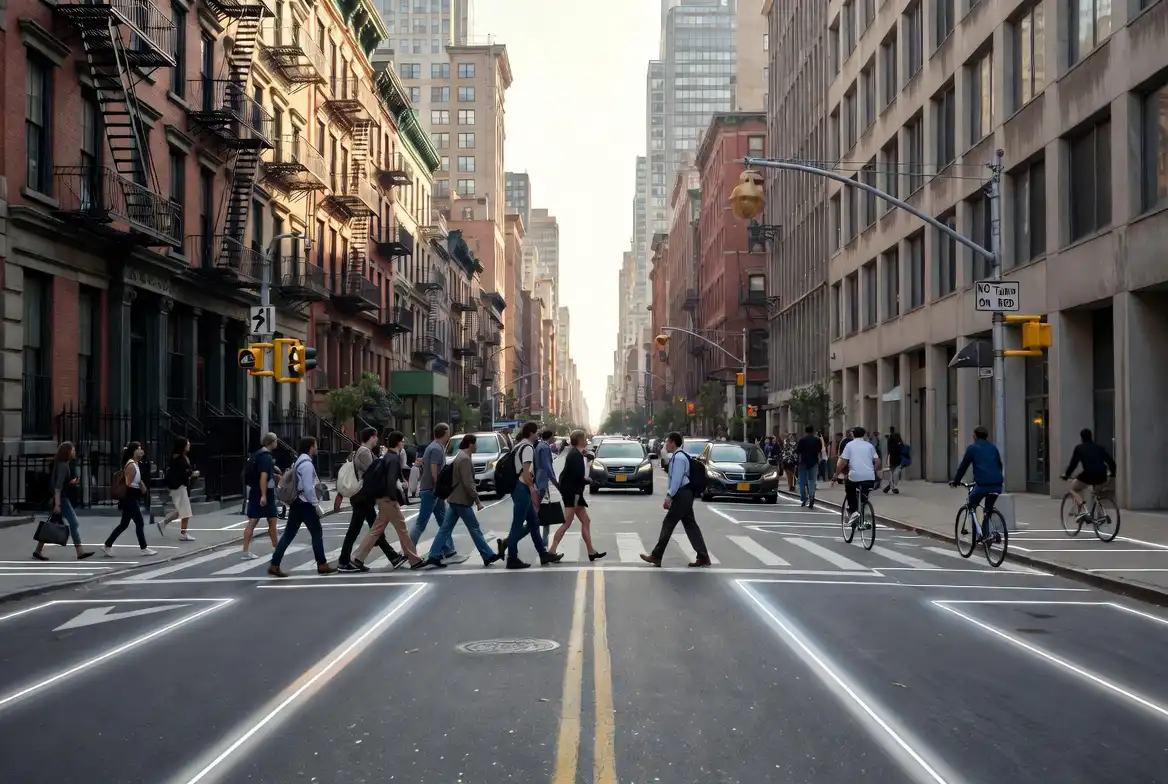
Record-Low Pedestrian Deaths Prove Vision Zero Works. Getting to Zero Will Take One More Layer — At No Cost to the City.
The numbers NYC DOT reported for the first half of 2026 are worth pausing on. Through June 29, 46 pedestrians…

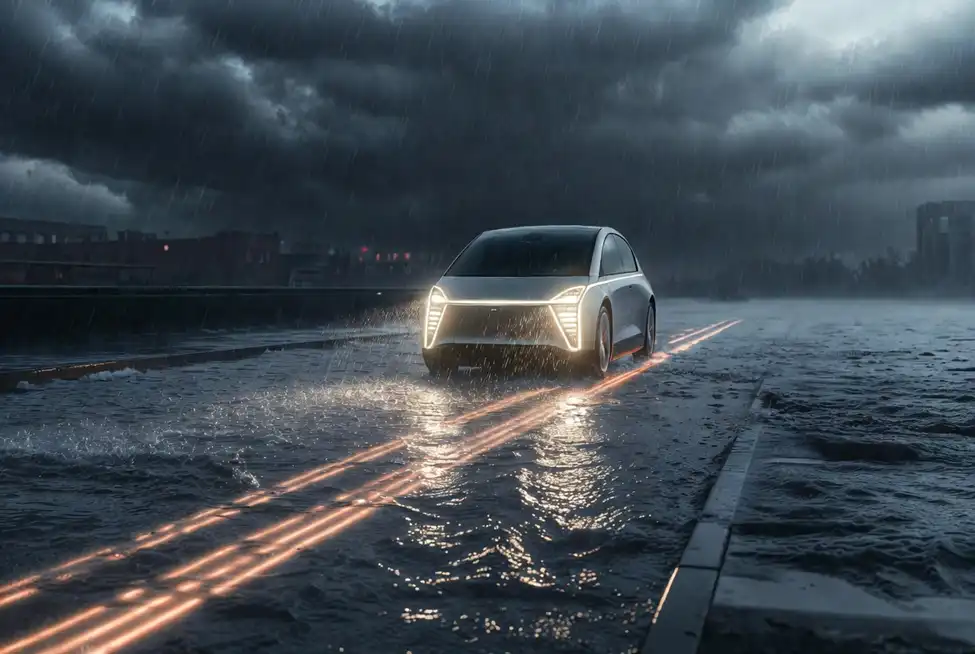
Why Waymo’s Flooded-Road Recall Proves Robotaxis Need All-Weather Positioning Infrastructure
A sixteen-year-old with a learner’s permit would have stopped at that flooded road. One of the most advanced autonomous driving…
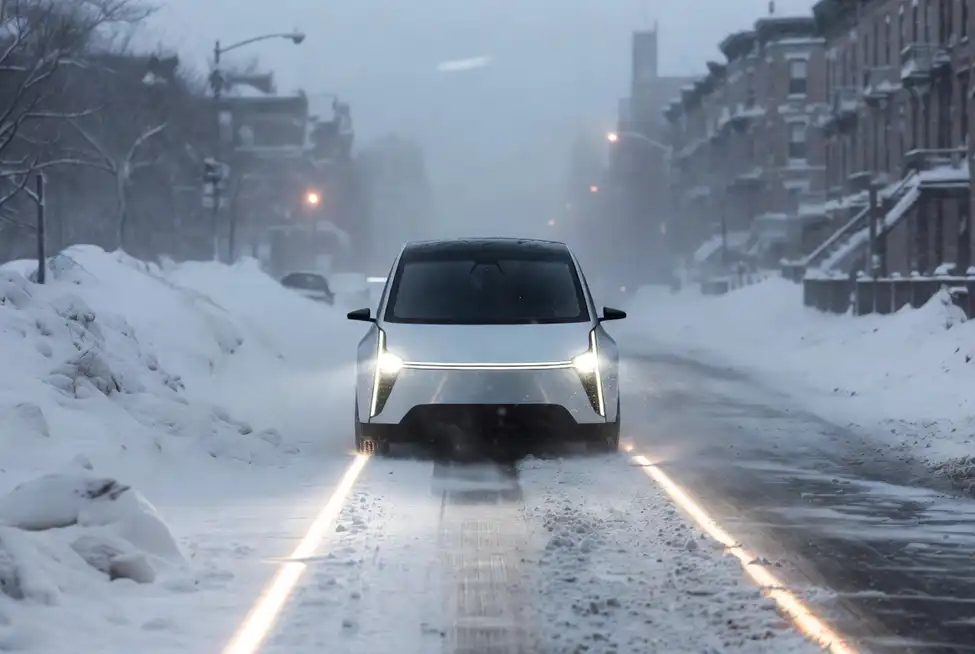
The Robotaxi Boom Has a Blind Spot. The SELF DRIVE Act Can Fix It.
The robotaxi era is no longer a forecast — it’s a fare. Waymo alone was delivering roughly 500,000 paid robotaxi…
