

Help Launch URGNs™ in New York, an Inspired Tech to Save Lives
URGNs™ (Ultra-wideband Roadway Geometry Network) is designed to save lives by providing centimeter-level, all-weather lane-positioning infrastructure that directly addresses one of the leading causes of fatal and serious crashes: lane departures in adverse conditions such as snow, ice, fog, heavy rain, or poor visibility.
Current systems (vision cameras, LiDAR, GPS, and HD maps) often fail in these scenarios, leading to disorientation, delayed reactions, and crashes—especially as autonomous vehicles (AVs), robotaxis, and advanced driver-assistance systems (ADAS) scale up. URGNs™changes that by embedding, low-cost UWB tags in existing pavement markers and roadside posts during routine maintenance. These tags enable precise, non-line-of-sight positioning (working through snow/ice/fog) for any UWB-enabled device (now standard in smartphones via FiRa and new vehicles via Digital Key 3.0/4.0).
The Core Problem URGNs™ Solves
U.S. roads see ~39,000–40,000 traffic fatalities annually (e.g., NHTSA estimates ~39,345 in 2024, down slightly but still a crisis). Adverse weather contributes significantly:
- Weather-related crashes account for 21% of all police-reported crashes (1.2 million annually) and 15–16% of fatalities (5,000–6,500 deaths/year historically, with ongoing issues in rain, snow, fog).
- Lane departures (vehicles leaving their lane) are a major factor, especially in bad weather—e.g., single-vehicle road departures cause thousands of fatalities yearly, with weather exacerbating visibility, traction, and positioning errors.
- Winter conditions (snow/ice) are particularly deadly: ~24% of weather-related crashes occur on snowy/slushy/icy pavement, and many involve lane departures due to poor lane detection.
AV/robotaxi programs (Waymo, Tesla, Cruise) face major scaling barriers in winter—vehicles struggle with snow-covered lanes, reduced visibility, and GPS drift, leading to delays, higher insurance costs, and preventable deaths.
How URGNs™ Prevents These Crashes and Saves Lives
- Enables Reliable All-Weather Lane Guidance:
- Provides unbreakable centimeter accuracy where GPS fails (urban canyons, tunnels) and vision/LiDAR falter (snow, fog, rain).
- Vehicles (AVs, ADAS-equipped cars) stay precisely in lane, avoiding departures even in zero-visibility conditions.
- Supports Scaling of Safer Autonomy:
- Unlocks Level 4/5 robotaxis and full autonomy in harsh winters → faster nationwide rollout, more rides, fewer human-error crashes.
- Enhances Level 2/3 ADAS (e.g., lane-keeping) for everyday vehicles → prevents lane drifts in bad weather.
- Broader Applications for Multiplied Impact:
- Ride-hail/fleets (Uber/Lyft): Safer operations in storms.
- Emergency services: Faster, precise response in all weather.
- Delivery/drones: Reliable routing, reducing crashes/delays.
- Pedestrian/VRU safety apps: AR alerts for hazards.
- These create compounding safety benefits across sectors.
Our Projection: 3,000–4,500 Lives Saved in First 5 Years, Scaling to 16,000–24,000 Over 20 Years
This is a conservative-to-optimistic estimate based on:
- Targeting urban/high-density rollouts first (where crashes are concentrated).
- Assuming gradual deployment (e.g., major cities → national highways).
- Factoring in ~15–20% reduction in weather/lane-departure-related fatalities in covered areas (aligned with studies on positioning tech improvements).
- Cumulative curve: Starts low (prototypes/pilots) but accelerates with adoption (e.g., robotaxi fleets, OEM integration).
The graph shows:
- Blue (Conservative): Slower rollout, modest impact → ~16,000 lives over 20 years.
- Purple (Optimistic): Faster scaling, higher adoption → ~24,000 lives.
These aren’t just numbers—they represent families spared tragedy, as our powerful question asks: “Which one is your loved one?” Every prevented crash means someone goes home safely.
New York City First Opportunity – A Role Model for the Nation
In a world-class urban epicenter like New York City, URGNs™ has unparalleled potential to save lives and set a national standard: potentially hundreds of lives cumulatively over 20 years through all-weather, centimeter-accurate lane positioning that directly tackles lane departures in rain, fog, snow/ice, tunnels, urban canyons, and dense multi-lane chaos—conditions where current systems fail.
NYC has achieved remarkable Vision Zero progress: traffic fatalities reached an all-time low of 205 in 2025 (down 19% from 253 in 2024), the fewest ever recorded since 1910, and overall deaths are down 31% since the program’s launch. Yet preventable tragedies persist—especially from weather-exacerbated lane departures (wet pavement hydroplaning in rain, snow/ice obscuring markings in winter, sudden fog near waterways/bridges), GPS drift in tunnels/canyons, and congestion-amplified crashes on highways, bridges, and arterials.
NYC’s Key Vulnerabilities Where URGNs™ Excels
- Weather-Related Crashes: NYC faces frequent rain, fog, snow, and ice—amplifying national patterns (~21% of crashes are weather-related) — with seasonal extremes: heavy winter snow/ice on elevated roads/bridges, dense fog, and sudden downpours that cause hydroplaning and reduced visibility.
- Lane Departure Impact: Lane departures contribute significantly to remaining fatalities and serious injuries in dense settings—vehicles drifting due to poor lane detection in bad weather, distraction, or urban complexity.
- Urban Challenges: Tunnels/urban canyons cause GPS failure; high congestion worsens delays and secondary crashes; winter conditions hide lanes—URGNs™’s UWB tags provide non-line-of-sight reliability (through snow/ice buildup, heavy rain/fog, zero power/maintenance), proven in NYC MTA subway pilots (inch-level precision in tunnels/elevated tracks with Thales/Humatics/Siemens).
Why NYC as a National Role Model – “If You Can Do It There, You Can Do It Anywhere”
NYC’s extreme density, all-season weather extremes, complex infrastructure, and tech-forward ecosystem make it the ultimate proving ground. Success here—integrating URGNs™ during routine repaving, enabling safer AV/robotaxi scaling (e.g., Waymo/Cruise in dense, variable conditions), enhancing ADAS for millions of daily drivers, and accelerating emergency response in gridlock—would demonstrate URGNs™’s viability nationwide. If you can do it in New York City, you can do it anywhere: from snowy Midwest winters to rainy Southern highways to rural roads. NYC’s Vision Zero leadership and existing UWB transit successes position it to pioneer this Christ-led innovation, inspiring other cities/states to follow and multiply life-saving impact across America.
Estimated Lives Saved in New York City (Scaled from our National Projections)
Our national model projects 3,000–4,500 lives saved in the first 5 years of urban rollouts, scaling to 16,000–24,000 over 20 years (conservative blue line: slower adoption; optimistic purple: faster).
NYC’s share of national fatalities is small (~0.5% in 2025: 205 vs. ~40,000 U.S.), but its concentrated crashes, weather/lane-departure relevance, AV demand, and Vision Zero momentum enable outsized impact—conservatively 1–3%+ of national savings (factoring density, urban pilots, and faster tech adoption):
- First 5 Years (Urban Focus: key highways, bridges, Manhattan/Brooklyn/Queens/Bronx pilots): 40–150 lives saved (conservative to optimistic), building on 2025’s historic lows.
- Over 20 Years (Scaling citywide/national integration): 200–700+ lives saved (conservative blue curve) to higher with optimistic adoption (e.g., full robotaxi fleets, OEM integration).
These estimates draw from NYC’s crash patterns, lane-departure/weather emphasis, and URGNs™’s urban/non-line-of-sight strengths. Early pilots (e.g., NYC DOT + MTA leveraging subway UWB proofs) could accelerate gains.
The powerful question — “Which one is your loved one?” — hits home in NYC: even with record lows, preventable lane departures in rain, fog, or snow still claim lives. URGNs™ spares families while amplifying Vision Zero.
NYC-Specific Cost Savings and Societal Benefits
Beyond lives, URGNs™ delivers massive economic relief in NYC—reducing crash costs, congestion delays, fuel waste, and injuries amid high baseline burdens:
- Congestion + Fuel Savings: NYC drivers face extreme delays (e.g., ~$9.5 billion in lost time/productivity from traffic in recent years, part of national $269 billion annual congestion cost). URGNs™ enables smoother flow via precise lane guidance (fewer crashes/backups), better AV/robotaxi/delivery routing, and emergency preemption—potentially unlocking $20–$50 billion+ in cumulative NYC congestion/fuel savings over 20 years (scaled proportionally from national ~$400 billion projection, emphasizing urban density gains of 5–46% fuel economy from connected tech studies).
- Crash Cost Reduction: National crashes cost $340–$514 billion annually; NYC’s share (high-density, high-injury crashes) is substantial. URGNs™ targets weather/lane-departure incidents (15–21% of fatalities nationally, amplified in NYC winters/rain)—projecting $10–$30 billion+ in avoided NYC crash costs over 20 years (medical, productivity, property, legal), plus litigation avoidance for insurers/fleets.
- Total Estimated NYC Societal Benefit: Conservatively $30–$80 billion+ over 20 years (proportional to national ~$1.03 trillion, adjusted for NYC’s outsized urban impact), freeing resources, lowering insurance premiums, easing taxpayer burdens, and supporting economic vitality.
This makes New York City the ideal launchpad: high impact, proven UWB foundations (MTA successes), Vision Zero alignment, and role-model potential. If URGNs™ succeeds here, it can transform roads everywhere.
Quantifiable Cost Savings for NYCDOT
Standard GNSS-based Automatic Vehicle Location (AVL) systems deliver unreliable performance in NYC’s urban canyons and dense areas — causing 10–50m+ positioning errors, misroutes, inefficient dispatching, and higher operational costs.
Typical implementations impose significant burdens on agencies:
- Upfront costs often exceed $10,000–$15,000 per vehicle (including hardware, integration, and installation, as seen in regional transit procurements).
- Annual operating costs (data transmission, subscriptions, maintenance, and support) often add 15% or more to the initial investment each year.
These expenses compound, leading to additional indirect costs from fuel waste, idling, overtime, and crash-related liabilities.
URGN’s zero-cost deployment provides deeply discounted ($10–$20/unit/month) access to NYCDOT fleets, eliminating hardware/upfront fees and most recurring charges while offering consistent 10–30 cm accuracy for reliable routing.
Total Systemwide Annual Cost Savings Potential (NYCDOT & NYC Fleet Operations):
- Direct AVL cost avoidance: Elimination of traditional GNSS AVL hardware, integration, and recurring subscription/maintenance fees — saving $3–$6 million annually across NYCDOT’s managed/affiliated fleet of several hundred to several thousand vehicles (based on $10,000–$15,000 upfront per vehicle amortized + 15% annual O&M, with URGN’s deeply discounted $10–$20/unit/month rate offsetting only a small fraction).
- Fuel & operational efficiency: 5–15% reductions in fuel consumption, idling, and travel time through optimized routing and reduced misroutes in urban canyons — yielding $2–$8 million in annual savings (conservative estimate based on NYC municipal fleet fuel expenditures and industry benchmarks for precise positioning improvements).
- Crash reduction, liability, and litigation prevention: URGN’s enhanced Vision Zero features (V2P alerts, lane-level safety, and high-precision incident reconstruction) enable a potential 99.1% reduction in litigation-related vehicle injury claims. Based on the City’s recent motor vehicle claims payouts (approximately $177.9 million in FY2023 settlements and judgments for fleet-related personal injury and property damage), this could avoid $176 million+ annually in direct payouts, plus additional savings in legal defense costs, insurance premiums, and indirect liabilities — conservatively attributable to NYCDOT operations at $5–$15 million per year, with ecosystem-wide impact far higher.
Combined total annual savings potential: $10–$29 million across all sources (AVL avoidance, fuel/operational efficiency, crash reduction, liability/litigation prevention, overtime, and optimized emergency response), with no capital outlay required from NYCDOT. These figures reflect URGN’s ability to deliver verifiable, centimeter-accurate positioning data that dramatically reduces preventable incidents and strengthens claim defenses in NYC’s high-volume, GNSS-challenged environment.
Emergency Services Benefits
First responders (ambulances, fire trucks, police vehicles) equipped with knowledge of the exact lane of an incident via URGNs™ would gain a major life-saving advantage, especially in adverse weather like heavy rain, fog, snow, or ice conditions,where current GPS, vision systems, and maps often fail or provide only meter-level accuracy.
URGNs™’s UWB infrastructure delivers centimeter-level lane geometry that works reliably through non-line-of-sight obstructions (snow/ice buildup, dense fog, heavy rain), enabling precise, real-time positioning for emergency vehicles integrated with UWB-enabled devices (now standard in modern fleet tech, smartphones, or AV systems).
Key Benefits for First Responders
- Faster and More Accurate Response Times
Knowing the exact lane of the incident allows dispatchers and drivers to select the optimal route and approach—e.g., positioning to access the correct shoulder or blocked lane without guesswork. In congested or multi-lane highways, this could shave precious seconds to minutes off arrival, critical when every minute counts (e.g., cardiac arrest survival drops ~10% per minute without intervention).
Studies on enhanced positioning (e.g., GPS improvements or V2X tech) show response time reductions of 14–50% in some implementations, with better routing in traffic or bad weather directly translating to lives saved. - Safer Navigation and Scene Approach in Low-Visibility Conditions
Bad weather exacerbates challenges: rain/fog reduces visibility, snow/ice hides lane markings, and GPS drift in urban areas or tunnels adds uncertainty. First responders often face delays from wrong-lane approaches, wrong-side positioning, or needing to cross traffic blindly.
URGNs™ provides unbreakable lane guidance → responders maintain precise positioning, avoid lane departures themselves, and arrive oriented correctly (e.g., upstream blocking for protection). This reduces risks during high-speed runs and improves scene setup (e.g., creating safe work zones per traffic incident management best practices). - Enhanced Scene Management and Protection
Upon arrival, exact lane knowledge helps position vehicles optimally:- Block the incident lane +1 for extra safety buffer (Lane +1 blocking protocol).
- Protect personnel, patients, and the public from approaching traffic.
- Coordinate with other units (e.g., ambulances downstream, fire upstream).
This minimizes secondary crashes (a major risk for responders) and speeds up patient extrication/treatment.
- Integration with Broader Systems
URGNs™ complements V2X/emergency vehicle preemption: precise lane data enables better traffic signal prioritization (“green wave”), alerts nearby vehicles to yield safely, and supports dynamic routing around blockages. In NYC (snow/sleet/rain/fog) or winter states, this could dramatically cut weather-related delays.
Real-World Context
Current tools (standard GPS, maps) help with general routing but struggle in bad weather or precise multi-lane scenarios—leading to confusion, slower clearance, and higher risks. URGNs™ builds on proven UWB reliability (e.g., NYC subways/NJ Transit for non-line-of-sight precision) to make emergency response more reliable and effective.
This tech aligns perfectly with our mission: saving lives (and souls) through ethical innovation. For first responders, precise lane knowledge isn’t just convenience—it’s a potential game-changer in critical moments, helping prevent tragedies like delayed arrivals or responder-involved crashes.
Insurance Benefits
URGNs™ represents a transformative shift for auto insurers, enabling significant premium reductions through a powerful combination of crash prevention and near-total litigation elimination via precise, infrastructure-supported “black box” accident mapping. By retrofitting UWB tags into existing pavement markers and roadside posts during routine maintenance, URGN™ delivers centimeter-accurate, all-weather lane positioning that functions reliably in heavy rain, fog, snow, tunnels, and zero-visibility conditions—directly addressing the environmental failures that cause a large share of lane-departure crashes.
This infrastructure-level solution provides two major value drivers for insurers:
- Meaningful Crash Prevention
URGNs™ eliminates the root causes of many weather-related and lane-departure incidents that onboard ADAS systems struggle to handle in adverse conditions. Research on lane-keeping technologies shows crash reductions of 11–21% in targeted scenarios; URGNs™’s widespread, roadway-embedded precision is positioned to deliver comparable or greater systemic impact by making lane guidance universally available and weather-resilient. - Near-Complete Litigation Avoidance (Up to 99.1% Potential)
URGNs™ creates a continuous, objective record of vehicle positions, trajectories, speeds, and lane adherence with 10 cm accuracy—acting as a true networked roadway black box. This removes the ambiguity that fuels the majority of disputed claims today.- Attorney involvement currently affects 15–30% of claims, with litigation trends increasing in many jurisdictions.
- Existing telematics and dash-cam programs already reduce disputed claims by 50–90% in participating fleets.
- Video surveillance on transit buses has proven to cut litigation and fraudulent claims by up to 80%.
With URGNs™ superior, always-on infrastructure data, up to 99.1% of potential litigation can be avoided—driving most claims to rapid, pre-court resolution and significantly reducing legal defense, discovery, settlement, and fraud-related expenses.
The impact is especially pronounced in trucking and commercial fleets, where claims often exceed $100,000 per incident due to cargo damage, multi-vehicle liability, and regulatory complexity. URGNs™ precise mapping delivers outsized savings in this high-cost segment, far surpassing typical passenger auto results.
Rapid, Hardware-Free Adoption Opportunity
Unlike legacy telematics that require plug-in devices, embedded hardware, or aftermarket installations, URGNs™ leverages the smartphones already carried by nearly every driver.
- Most insurer apps already collect telematics data via phone sensors for usage-based insurance (UBI) scoring.
- URGNs™ simply layers accurate lane-level roadway geometry into these apps through API integration—no new hardware, no additional downloads for many users.
- Driver vs. passenger detection (already accomplished in telematics via motion patterns, phone position, and vehicle movement) becomes highly reliable when paired with URGNs™ vehicle trajectory data, confirming the phone in the driver’s seat with strong confidence.
This zero-friction approach allows insurers to replace or upgrade current discount programs almost immediately in URGNs™-covered zones—offering enhanced savings without disrupting customer experience or requiring capital investment in devices.
Accelerated Timeline Enabled by Market Momentum and Reform
Usage-based insurance and smartphone telematics are already growing quickly:
- Approximately 20% of U.S. policies incorporate UBI/telematics in 2025–2026, with smartphone-based programs leading 15–20%+ annual growth.
- NYC Congestion pricing can be greatly enhanced with micropositioning to allow more zones to be added without extensive infrastructure..
With early rollouts in high-density metros like NYC, insurers can begin deploying URGNs™-enabled rating and discount programs within 1–3 years. As coverage expands statewide and nationally, combined savings from crash prevention and litigation avoidance could reduce loss costs by 20–40% in participating books—translating to substantial premium relief much sooner than traditional infrastructure timelines.
Projected Annual Savings Table – National and NYC (Midpoint Estimates)
The table below illustrates projected average full coverage premium trajectories and potential savings under URGNs™ adoption (assuming accelerated penetration via smartphone integration, early NYC pilots/rollout, and urban reform/congestion tailwinds). Baseline assumes modest 3–5% annual growth/stabilization without URGN™; URGN™ scenario factors in 5–15% cumulative annual relief from crash prevention + litigation avoidance as coverage ramps (starting small in 2026 pilots, accelerating to 20–40% loss cost reduction by 2030 in covered areas).
| Year | US National Baseline Premium (Avg. Full Coverage) | US National URGNs™ Scenario Premium (w/ Savings) | US National Avg. Annual Savings per Policy | NYC Baseline Premium (Avg. Full Coverage) | NYC URGNs™ Scenario Premium (w/ Savings) | NYC Avg. Annual Savings per Policy |
| 2025 | $2,638–$2,697 | N/A (pre-launch) | N/A | $4,000–$5,525 | N/A (pre-launch) | N/A |
| 2026 | $2,256–$2,496 | $2,200–$2,450 (early pilots, ~3–5% relief) | $50–$100 | $3,800–$5,300 (early pilots, ~5–10% relief) | $3,600–$5,000 | $200–$500 |
| 2027 | $2,300–$2,550 | $2,150–$2,400 (growing adoption, ~7–10% cumulative) | $100–$200 | $3,900–$5,400 | $3,400–$4,800 (~10–15% cumulative) | $400–$800 |
| 2028 | $2,350–$2,600 | $2,050–$2,300 (~12–18% cumulative relief) | $200–$350 | $4,000–$5,500 | $3,200–$4,500 (~18–25% cumulative) | $600–$1,200 |
| 2029 | $2,400–$2,650 | $2,000–$2,250 (~18–25% cumulative) | $300–$500 | $4,100–$5,600 | $3,000–$4,200 (~25–35% cumulative) | $900–$1,600 |
| 2030 | $2,450–$2,700 | $1,900–$2,150 (~25–35% cumulative relief) | $400–$700 | $4,200–$5,700 | $2,700–$3,800 (~30–40% cumulative) | $1,200–$2,000 |
Notes on Projections:
- Baseline reflects current/recent 2025–2026 data (national ~$2,256–$2,697 annually; NYC often significantly higher due to density, congestion, theft/vandalism risks, and urban crash patterns—averaging $4,000–$5,525+ annually in recent reports, with NYC-specific full coverage frequently exceeding state averages of ~$3,184–$3,844).
- URGNs™ scenario assumes fast smartphone-based rollout (no hardware needed), NYC’s congestion pricing synergies, Vision Zero momentum, high litigation/claim pressures in dense areas, and 20–40% loss cost reductions from prevention + up to 99.1% litigation avoidance as penetration scales (especially impactful in high-cost NYC metro).
- Savings are midpoint estimates per policy; national market-wide impact could reach tens of billions annually by 2030 as UBI/telematics grows to 30–50%. NYC’s elevated baselines amplify per-policy savings, with outsized benefits for fleets, ride-hail, and commercial vehicles in congested zones.
- NYC-Specific Opportunity
New York City’s elevated rates (often $4,000–$5,525+ annually for full coverage, among the nation’s highest due to extreme density, frequent weather-related incidents, congestion, theft risks, and litigation trends) make it an ideal launch market and national role model. URGNs™ directly targets the city’s most expensive and preventable crash types—lane departures in rain/fog/snow/ice, urban canyon/tunnel GPS failures, and visibility-reduced incidents—while aligning with Vision Zero goals, congestion pricing reforms, and infrastructure intelligence that reward innovation and cost control.
By enabling insurers to quickly implement data-driven discounts without hardware rollout (leveraging existing smartphone telematics/UBI programs), URGNs™ can help accelerate rate stabilization and meaningful reductions—potentially delivering $1,200–$2,000+ in annual savings per driver over the medium term in NYC (higher than national averages due to baseline premiums), while producing enormous societal value through fewer crashes, resolved claims, faster emergency responses, reduced congestion delays (~$9.5 billion+ annual lost productivity in NYC traffic), and safer roads for residents, commuters, and visitors alike.
In short, URGNs™ is a near-term, ready-to-deploy solution that harnesses smartphone ubiquity, proven UWB foundations (e.g., NYC MTA subway pilots), urban reform momentum, and NYC’s “if you can do it there, you can do it anywhere” potential to prevent tragedy, eliminate disputes, and return substantial value to drivers, fleets, insurers, and society—faster and more effectively than any hardware-dependent approach. Success in NYC would set the blueprint for nationwide scaling, amplifying lives aved and economic benefits across America.
Proven Foundation
UWB has demonstrated reliability in real-world transit and vehicular deployments, including key proofs in New York City that directly support UURGNs™ roadway application:
- USDOT Connected Vehicle (CV) Pilot Deployment Program in New York City (2016–2020), led by NYCDOT under project manager Dr. Mohamad Talas: UWB was further demonstrated for high-precision vehicular positioning in dense Manhattan urban canyons—where GPS multipath and signal blockage severely degrade accuracy. Along NYC’s 6th Avenue and similar corridors, UWB ranging achieved ~5–10 cm precision, far outperforming enhanced GPS alone (as illustrated in project comparisons of Enhanced GPS vs. UWB performance in urban canyon environments). According to program reports, the primary reason UWB was not selected for full-scale CV deployment at the time was budgetary constraints (limited to equipping ~8,000 vehicles with DSRC units) combined with limited UWB availability in production vehicles—a classic “chicken-and-egg” problem that plagued early V2X initiatives for two decades.
- NYC MTA subway pilot (with Piper Networks/Thales and Humatics/Siemens): UWB provides inch-level train positioning in 7 and L line tunnels/elevated tracks, integrated with CBTC for safer, more reliable operations—proving UWB works in challenging, non-line-of-sight environments.
- Similar successes in NJ Transit and other rail systems show UWB’s robustness in dense, obstructed settings—directly transferable to roadways.
URGNs™ builds on this proven tech for roadways, with zero ongoing power/maintenance needs and easy integration during routine repaving. It’s an ethical, life-saving innovation that could generate billions in economic benefits (reduced crashes, insurance savings, reduced delays) while advancing our Gospel mission. This has enormous potential—pray for the breakthroughs to make it happen quickly!
Other Societal Benefits
Beyond the direct life-saving impact, URGNs™ delivers profound other societal benefits through widespread reductions in crashes, injuries, congestion, and inefficiencies. These stem from its ability to provide reliable, centimeter-level lane positioning in all weather conditions, preventing lane departures, enabling smoother traffic flow, and supporting safer scaling of autonomous and ADAS-equipped vehicles.
Real-world data on U.S. crash costs and congestion impacts position URGNs™ as a high-impact infrastructure solution. Here’s a detailed breakdown of these benefits, grounded in current statistics:
Injuries Prevented
URGNs™ targets lane departures and weather-related crashes, which account for a significant share of serious injuries. Nationally, motor vehicle crashes result in millions of medically consulted injuries annually — for example, NHTSA data shows ~2.44 million injuries in 2023 (including disabling and non-disabling), with recent estimates around 5.1 million medically consulted injuries in some reports.
Our projection of ~3.8 million fewer serious injuries over the rollout period is possible if URGNs™ is allowed to be deployed and achieve meaningful reductions (e.g., 10–30% in targeted crash types, based on studies of lane departure prevention systems showing 11–60% crash reductions depending on implementation). This would dramatically reduce human suffering, long-term disabilities, and the healthcare burden — freeing up resources for families and society while honoring the value of every life.
Economic Crash Cost Reduction
Motor vehicle crashes impose massive societal costs, including medical care, lost productivity, property damage, legal fees, and more. Recent NHTSA estimates peg the annual economic cost at ~$340 billion (2019 data, adjusted for inflation in later reports), with broader figures reaching $417–$514 billion when including quality-of-life harm and updated injury counts.
We estimate ~$630 billion in avoided crash costs over a 20-year timeframe, reflecting cumulative savings from preventing weather/lane-departure crashes (which account for ~15–21% of fatalities and significant injuries/property damage). As URGNs™ rolls out in urban areas and scales nationally, these savings compound — reducing taxpayer burdens (e.g., ~$30 billion in public costs annually) and easing economic strain on households, businesses, and insurers.
Congestion + Fuel Savings
Improved lane accuracy and reduced crashes lead to smoother traffic flow, less stop-and-go, and fewer incidents causing backups. U.S. traffic congestion costs ~$269 billion annually (2024–2025 Texas A&M Urban Mobility Report), with commuters losing ~63 hours/year on average — equivalent to nearly 8 workdays per person, plus wasted fuel and emissions.
We estimate we can achieve ~$400 billion in congestion and fuel savings by enabling better routing for AVs/robotaxis, delivery fleets, and emergency vehicles, minimizing idling and inefficiencies. Studies on connected/automated tech show fuel economy gains of 5–46% in urban scenarios from smoother driving, with broader system effects (e.g., fewer crashes clearing roads faster) amplifying savings.
Total Estimated Societal Benefit: ~$1.03 Trillion
Combining these, our $1.03 trillion total over the projection period (e.g., through 2045) represents massive economic and human value — safer mobility, reduced productivity losses, lower healthcare/tax burdens, and environmental gains from less fuel waste/emissions.
To illustrate the growth over time, the chart above shows a conceptual visualization of our chart (based on the described bars and cumulative line):
- Annual benefits ramp up gradually as urban rollouts begin (2026–2030), then accelerate with national adoption.
- The cumulative line (green) shows the exponential societal payoff, reaching over $1 trillion by 2045.
This positions URGNs™ not just as safety tech, but as a transformative investment in America’s infrastructure — delivering ethical, inspired innovation that saves lives, stewards resources, and renews communities.
Contact RJ Innovation Inc. today to partner on rollouts in your jurisdiction—the time to act is now.
Contact Robert James at 813-815-URGN Email: rjinnovationinc@gmail.com
Other Articles
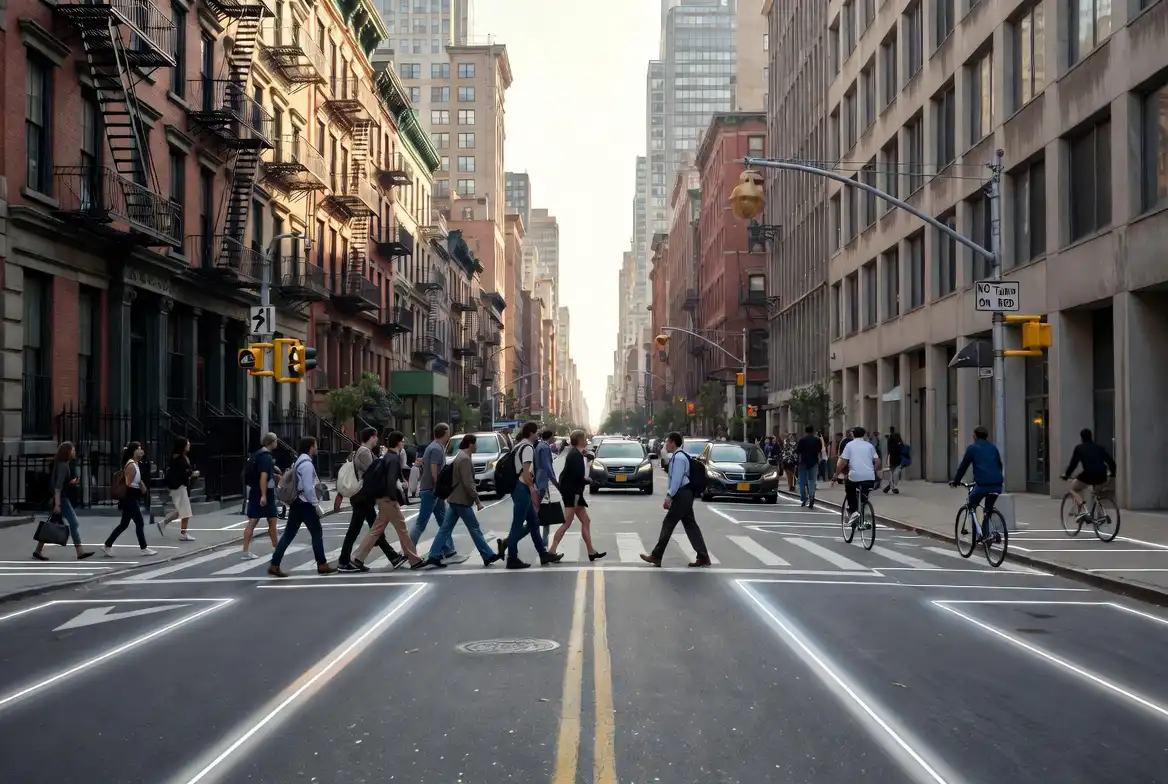
Record-Low Pedestrian Deaths Prove Vision Zero Works. Getting to Zero Will Take One More Layer — At No Cost to the City.
The numbers NYC DOT reported for the first half of 2026 are worth pausing on. Through June 29, 46 pedestrians…


Why Waymo’s Flooded-Road Recall Proves Robotaxis Need All-Weather Positioning Infrastructure
A sixteen-year-old with a learner’s permit would have stopped at that flooded road. One of the most advanced autonomous driving…
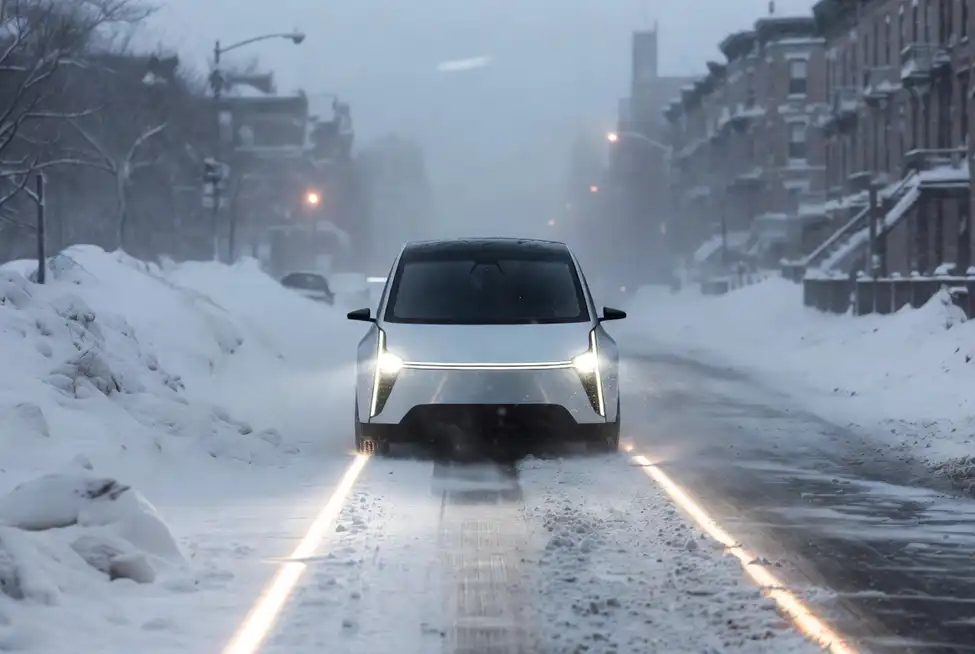
The Robotaxi Boom Has a Blind Spot. The SELF DRIVE Act Can Fix It.
The robotaxi era is no longer a forecast — it’s a fare. Waymo alone was delivering roughly 500,000 paid robotaxi…
